Acoustic sets played in the back room of a local pub. Soft music coming through the speakers of a cosy coffee shop. Masterful guitar and an imperfect voice regaling stories and traditions of the past. Contemporary music compiled into a Spotify playlist. Folk music defies any attempt at characterisation or definition. So, what is folk? Can it still be the same folk music of our past, passing on ideas of social change and oral tradition? Or have we lost touch with the roots that made folk what it is today?
Folk is defined by the very culture and people from which it stems. English folk is different from Scottish folk, which is different from American folk, which will be different to the folk traditions of any country that has its own local music culture. Moreover, contemporary folk is different to traditional folk, and every genre has its own subgenre of folk. The point is, folk’s importance is in its flexibility, its ability to mean a different thing to every society, group, and individual. In that case, what truly does characterise folk?
‘Folk’, coming from the German ‘Volk’ (meaning people) shows its roots in the importance of people. It is an oral tradition; a tool for social change, a mode of free speech, and a means of artistic experimentation. Folk thus becomes ‘the music of the people’ by holding meaning for both individual and collectivist ideas. This is especially evident in its roots in humanity and role as a means of self-expression, as expressed in the lyrics of Pete Seeger that call for social justice, or in the storytelling of Richard Thompson’s ‘Beeswing’ (set in our very own Dundee). And yet, is the folk of today the same as the folk of our past? Can it still be defined as its own genre or even as its own musical tradition, as digitised music has become the preferred, or at least most used method of listening in today’s contemporary world?
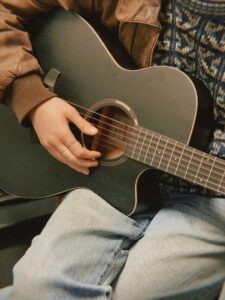
The importance of folk as ‘the music of the people’ is evident in its past as a cultural tool for passing on sentiments and drive to fight for freedom, civil rights, and incite protest. I am a Union Woman by Aunt Molly Jackson used to be the opening song for her speeches in which she called for workers to join the National Miners Union (NMU). Singing in the 1930’s, Jackson used the power of folk music to unite people for a political cause. The song does not shy away from its politics, “I do not like the bosses and the bosses don’t like me. Join the NMU, join the NMU.” Aunt Molly Jackson levels the field and collapses boundaries between the singer and the audience using the connotations of community inherent in the dulcet sounds of folk.
This same application of folk into civil movements is clear in the voices of Woody Guthrie, Joan Baez, and Ani Difranco. Singers like Aunt Molly Jackson were the beginning of the growth of the folk music scene, one later added to by the likes of Bob Dylan and Simon and Garfunkel, and in more recent times bands and singers such as Gregory Alan Isakov, Johnny Flynn, and Mumford and Sons. The question facing these contemporary singers is whether their music still fits the category of Folk music that these early singers popularised.
The singers mentioned above are some of the biggest names in the contemporary folk scene. Writing in a completely different socio-political landscape than their antecedents, it is harder to find the political themes that made themselves so prevalent in the beginnings of mainstream folk. In a conversation between Billy Bragg and Johnny Flynn titled, ‘Where have all the protest songs gone?’, the two folk singers discuss why mainstream music has lost its political edge. Billy Bragg posits that in the past “people expected you, as a young musician, to have a political view. Now, I think the opposite is true – if you do, you get stick from the mainstream music press, or you’re dismissed as earnest or whingeing.” And, blaming social media for a change in how artists receive feedback and how the reception of so called ‘political music’ has changed, he states, “If I was starting out trying to make my first political expression and I was getting that sort of shitstorm, I would think twice.”
Johnny Flynn speaks to the power of folk in community building that feels more like the music of a past era in his optimistic view that “if you put your energy into something positive and community-based, that gathers an energy and wins people’s hearts.” Bragg ends the interview on a note with a claim that “we should be asking questions that make people’s ears prick up,” which reads like a call to artists to take responsibility for continuing the political tradition of folk that feels missing in the music of today.
With Folk’s oral tradition waning and music being popularised primarily through the digital format and social media, does folk survive in the same condition that it has done for centuries? Many argue that the recording of folk music is antithetical to its intention, and it is true that folk music has strayed from its roots, but I think folk music is more important than ever as a means of communication and a tool for change.
Music has power, and that is still widely felt today even as oral traditions have made room for the commercialisation of media as our main output for debate, news, and political television. Perhaps labels are indeed blurrier now in what can be defined as concretely folk, or even just a subgenre. However, these labels are not as important as its potential for impact in the wider social life of music and protest. There are still modern artists trying to break through the barrier of political silence that is impressed upon the modern music scene. Mon Rovîa is an example of an upcoming artist using the folk label to discuss ideas of anti-war pacifist values (go and have a listen!).
I don’t believe that folk music can be defined or categorised as anything but the ‘music of the people’; people evolve and so folk must follow as we become a more connected and digital society.

Comments